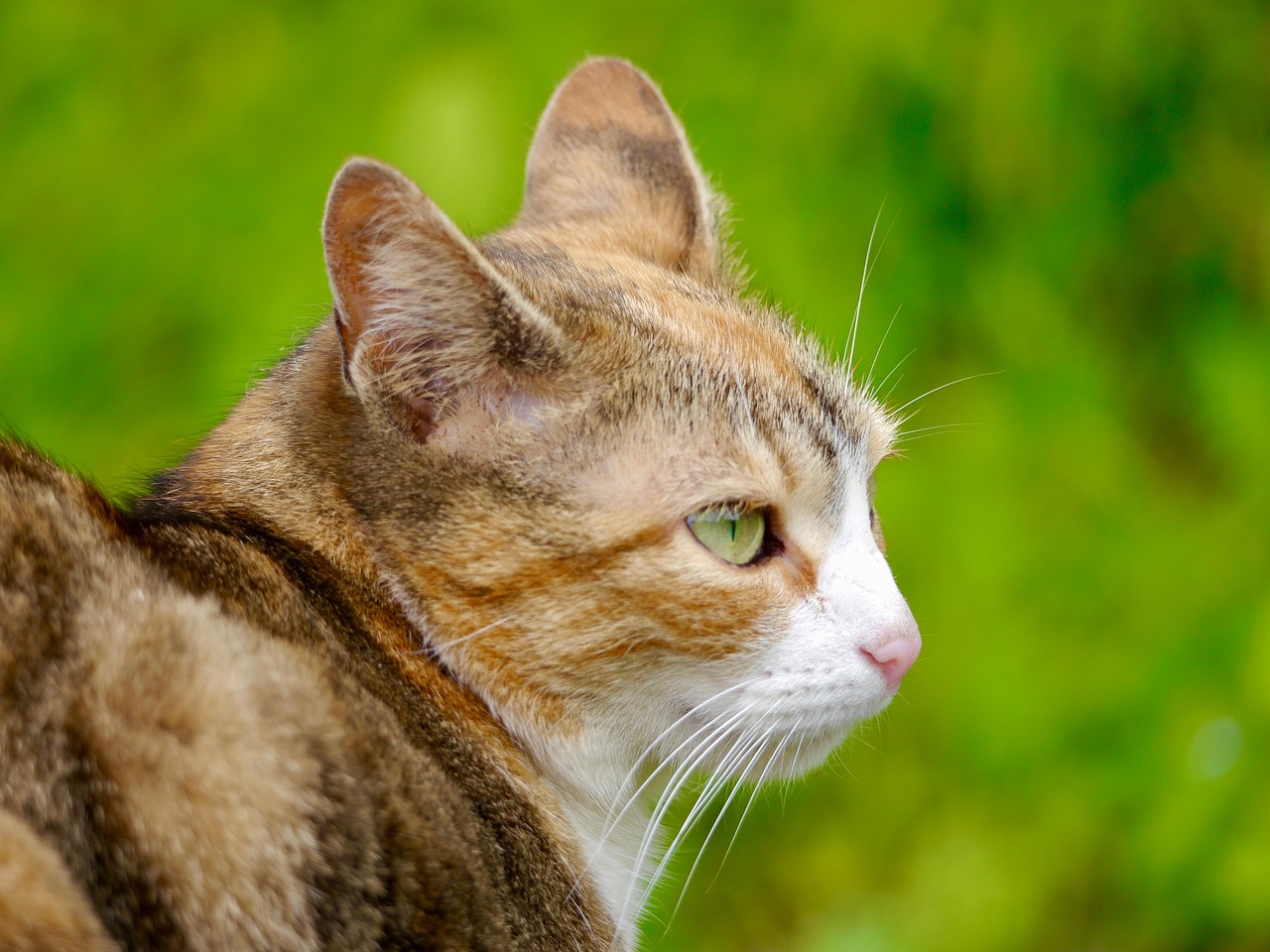
Cats may live comfortably in our homes, yet their behaviour remains deeply rooted in ancient survival instincts honed over millions of years of evolution. Understanding feline psychology and the instincts that drive cat behaviour is fundamental to interpreting your cat's actions, improving their wellbeing, and building a stronger bond. Your cat is not being randomly destructive, overly independent, or mysteriously aloof—they are being a cat, expressing innate drives that have been passed down through countless generations. This expert guide explains why cats behave the way they do, based on evolutionary biology, neuroscience, and behavioural research, helping you appreciate your feline companion's complex inner world.
This comprehensive guide explores the origins of cat instincts, explains the hunting instinct and how it manifests in domestic cats, describes territorial behaviours and their psychological importance, clarifies feline social psychology and emotional capabilities, addresses fear and survival responses, explains communication methods, examines play as instinct training, discusses emotional psychology in cats, addresses when instincts become problematic behaviours, and provides practical strategies for working with rather than against your cat's natural drives. By understanding cat psychology thoroughly, you can create a richer, more fulfilling life for your feline companion.
The Origins of Cat Instincts
From Wild Ancestors to Modern Companions
Domestic cats (Felis catus) evolved from African wildcats approximately 9,500 years ago, beginning a unique journey alongside humans. Unlike dogs, which underwent extensive selective domestication and breeding, cats experienced relatively minimal human intervention in their genetic evolution. This means domestic cats have retained an exceptionally high degree of their wild ancestry's instinctual drive and behavioural patterns.
Why Cats Retain Wild Instincts
Cat domestication followed a different path than dog domestication: Early humans likely encouraged wildcats to settle near agricultural villages because they hunted rodents—a mutually beneficial relationship. However, this partnership never required cats to undergo the level of behavioural modification and selective breeding that created modern dog breeds. Consequently, even the most docile, contented house cat carries nearly identical genetic programming to their wild ancestors.
The Evolutionary Programming
Cats are hard-wired for:
- Hunting: The predatory drive remains one of the strongest instincts, even in well-fed indoor cats
- Territory control: Establishing and defending territory is essential to feline psychology
- Survival awareness: Vigilance, caution, and threat assessment remain highly active
- Independence: Self-sufficiency and solitary decision-making are encoded in their nature
The Hunting Instinct
The Strongest Drive in Feline Psychology
The hunting instinct is perhaps the most powerful and persistent drive in domestic cats, even more influential than hunger. Cats who have just eaten a meal will eagerly stalk, pounce, and "hunt" toys or live prey. This behaviour is not evidence of cruelty or a sign that your cat is not eating enough—it is purely instinctual and deeply ingrained in feline psychology.
Why Cats Hunt Despite Being Fed
The hunting instinct exists independently of hunger because in the wild, cats needed to hunt constantly to ensure survival, regardless of whether they had eaten recently. Prey availability is unpredictable in nature, so cats evolved to hunt whenever the opportunity presented itself. This ancient programming remains active in modern domestic cats.
Observable Hunting Behaviours
You can observe your cat's hunting instinct in these daily behaviours:
- Stalking: Slow, careful approach with lowered body and intense focus on the target
- Pouncing: Sudden explosive jump with front paws extended
- Batting: Using paws to knock objects around (especially those that move unexpectedly)
- Bringing "gifts": Delivering dead prey, toys, or socks to owners, which represents sharing a successful hunt
- Chirping: Vocalisation made while observing birds or prey, related to hunting anticipation
The Psychological Purpose of Hunting Behaviour
Hunting is not just about food—it serves crucial psychological functions:
- Provides mental stimulation and engagement
- Fulfils the natural prey response to movement
- Maintains physical fitness and agility
- Prevents boredom and anxiety
- Strengthens confidence and self-efficacy
Territorial Instincts and Psychological Security
Territory as Psychology, Not Just Geography
Cats are deeply territorial animals, and territory represents much more than just physical space. For cats, their territory is:
- A safe zone: A place where they feel secure and in control
- A resource base: Where food, water, rest areas, and litter boxes are reliably located
- A hunting ground: Their domain for hunting and exploration
- Identity: Territory is part of who they are psychologically
Territorial Behaviours
Cats express territorial instincts through:
- Scent marking: Rubbing against furniture, walls, and people (glands on their face, body, and paws release pheromones)
- Scratching: Sharpening claws while simultaneously marking territory with pheromones and visual marks
- Patrolling: Regular walks through their territory to reinforce control and monitor for threats
- Defending space: Aggressive responses to unfamiliar cats or animals entering their domain
Territory and Mental Health
Territory is psychologically crucial for cats: A cat without a secure, established territory experiences chronic stress and anxiety. This is why sudden environmental changes (moving homes, new pets, rearranged furniture) can dramatically affect a cat's behaviour and emotional state. Conversely, a cat with a stable, familiar territory experiences significantly better mental health and emotional security.
Social Psychology and Emotional Capacity
The Myth of the Aloof Cat
Cats are often characterised as independent and emotionally distant, but this perception is only partially accurate. Research in feline attachment reveals that cats form genuine emotional bonds with their owners, demonstrating selective social attachment and consistent preference for their chosen humans. However, cats express attachment and emotion more subtly than dogs, making their feelings less obvious to observers.
Feline Emotional Capabilities
Cats experience a full range of emotions:
- Attachment and comfort: Preference for familiar people and places
- Stress and anxiety: Visible when faced with threats or changes
- Curiosity: Active exploration and investigation of new stimuli
- Frustration and irritation: Clear signals when thwarted or annoyed
- Contentment: Expressed through purring and relaxed body posture
- Fear: Protective responses to perceived threats
Attachment Styles in Cats
Research has identified attachment patterns in cats comparable to human attachment: Securely attached cats remain calm in their owner's presence and show mild distress when separated. These cats view their owner as a secure base for exploration. Anxiously attached cats show excessive neediness and significant distress during separation. Understanding your cat's attachment style helps you support their emotional needs appropriately.
Fear and Survival Psychology
The Dual Nature of Feline Psychology
Cats are simultaneously predators and prey, which fundamentally shapes their psychology and behaviour. Even large domestic cats retain instinctive awareness that they could be hunted by larger predators. This dual consciousness creates a psychology oriented toward both hunting success and predator avoidance.
Fear Triggers
Cats are naturally cautious and alert due to survival psychology. Common fear triggers include:
- Loud, unexpected noises (vacuum cleaners, thunderstorms, fireworks)
- Sudden movement or visual changes
- Unknown environments and unfamiliar cats or animals
- Handling by unfamiliar humans
- Changes in routine or territory
Survival Responses
When afraid, cats typically respond with:
- Hiding: The primary fear response—retreating to secure spaces
- Freezing: Remaining perfectly still to avoid detection
- Flight: Rapid escape from the threatening situation
- Fight: Defensive aggression (hissing, swatting, scratching) when escape is impossible
Communication Instincts
The Multiple Languages of Cats
Cats communicate through several sophisticated channels, and understanding these systems reveals the complexity of feline psychology and social awareness.
1. Body Language
The most reliable indicator of feline emotional state:
- Tail position: Raised tail = confidence; tucked tail = fear; swishing tail = agitation or focused attention
- Ears: Forward ears = interest; flattened ears = anger or fear; swivelling ears = attention to multiple stimuli
- Eyes: Dilated pupils = arousal (fear or excitement); slow blinks = contentment and trust; direct staring = challenge
- Body posture: Relaxed body = comfort; arched back = defensive threat; crouching = hunting readiness or fear
- Whiskers: Forward whiskers = confidence; pulled-back whiskers = fear or discomfort
2. Vocalisation
Cats produce a surprising variety of intentional sounds:
- Meowing: Primarily used for communication with humans, not other cats (adult cats rarely meow to each other)
- Purring: Associated with contentment, but also used when anxious or injured for self-soothing
- Hissing and growling: Defensive vocalisation warning to back away
- Chirping: Hunting-related vocalisation made when observing prey or in greeting
- Yowling: Mating-related vocalisation or distress calls
3. Scent Marking
One of the most important but least visible communication systems:
- Rubbing: Glands on the face, body, and paws release pheromones that communicate ownership, comfort, and identity
- Scratching: Leaves both visual marks and scent pheromones
- Spraying: Urine marking in territorial disputes (more common in intact males)
Play as Instinct Practice
Play Is Predatory Rehearsal
Play is not frivolous entertainment—it is how cats practise and refine their hunting skills. When you observe a cat playing with a toy mouse, pouncing on a laser pointer, or chasing a feather toy, they are mentally and physically rehearsing the hunt. Play activities simulate the entire hunting sequence: stalking, pouncing, capturing, and "killing".
Why Play Matters Psychologically
- Skill development: Refining motor skills, timing, and predatory accuracy
- Mental stimulation: Engaging the brain in problem-solving and strategic thinking
- Physical fitness: Maintaining strength, agility, and cardiovascular health
- Stress relief: Channelling predatory instinct in appropriate ways
- Emotional regulation: Expressing natural drives in constructive outlets
Consequences of Insufficient Play
Cats denied adequate play and instinct expression develop psychological and behavioural problems:
- Chronic boredom and depression
- Anxiety and stress-related behaviours
- Destructive scratching or chewing
- Aggressive play or redirected aggression toward humans
- Weight gain and metabolic issues
- Excessive vocalization or other attention-seeking behaviours
When Instincts Become Behavioural Problems
Understanding the Psychology Behind Problem Behaviours
Many so-called behavioural problems are actually natural instincts expressed in domestic environments. Understanding the psychology behind the behaviour is crucial for solving it appropriately.
Aggression
Usually stems from either defensive (fear-based) or territorial instincts, not malice. A cat scratching or hissing is following their survival programming.
Scratching Furniture
Serves territorial marking, claw maintenance, and stretching functions—not destructiveness. Cats need appropriate outlets for this instinct.
Night Activity
Cats are crepuscular (most active at dawn and dusk). Nocturnal activity reflects their natural hunting cycle, not misbehaviour.
House Soiling
Often indicates stress, territorial anxiety, or litter box dissatisfaction—all rooted in psychological needs, not spitefulness.
Working With Your Cat's Instincts
Strategies That Honour Feline Psychology
Rather than fighting against your cat's instincts, successful cat ownership means working with them. This approach simultaneously reduces behavioural problems and improves your cat's psychological wellbeing.
Practical Implementation
- Provide interactive toys: Wand toys, laser pointers, and puzzle toys channel hunting instinct appropriately
- Create vertical spaces: Cat trees, shelves, and high perches satisfy territorial and exploration instincts
- Maintain consistent routine: Predictability reduces anxiety and provides psychological security
- Offer safe hiding spots: Multiple secure spaces honour the hiding instinct and provide stress relief
- Provide scratching posts: Multiple options in various locations allow territorial marking and claw maintenance
- Avoid punishment: Punishment contradicts understanding of feline psychology and increases anxiety
- Respect personal space: Allow your cat to approach you on their terms, honouring their independent nature
Cat instincts and psychology are not quirks or aberrations—they are sophisticated evolutionary adaptations refined over millions of years. Domestic cats retain remarkably high degrees of wild ancestry instincts because they never underwent the extensive selective domestication that created modern dog breeds. The hunting instinct remains the strongest drive in feline psychology, active regardless of hunger. Territory is psychologically crucial, providing security and identity. Cats form genuine emotional bonds, though expressing them subtly. Fear and survival psychology shape their caution and vigilance. Communication occurs through body language, vocalisation, and scent marking. Play serves as predatory rehearsal essential to psychological health. Recognising that behavioural problems reflect natural instincts expressed in domestic environments allows owners to address them appropriately. Understanding and working with rather than against your cat's instincts creates a healthier, happier relationship and eliminates many common behavioural issues. Your cat isn't being weird or difficult—they're being a sophisticated predator with millions of years of evolutionary programming.
This guide is based on evolutionary biology, behavioural research, and feline psychology studies. Domestic cats retain approximately 95% genetic identity with wild African wildcats despite 9,500 years of domestication. Understanding feline instincts and psychology improves both cat welfare and human-cat relationships. If your cat displays behavioural problems, consult with a veterinary behaviourist who understands feline psychology before assuming behaviour is willful or spiteful. Individual cats vary in temperament and response to environmental factors. The goal is to create an environment that honours feline psychology while meeting the needs of human-cat cohabitation.