Cats are frequently stereotyped as independent, mysterious, and selective in their responses to human direction, leading many to assume that cats are somehow less intelligent than other pets, particularly dogs. This persistent myth fundamentally misunderstands both how cats think and what intelligence actually means in different species. Modern research in feline cognition definitively demonstrates that cats are highly intelligent animals—just intelligent in ways that differ significantly from dogs and humans, shaped by their evolutionary history as solitary hunters rather than cooperative pack animals. A cat's apparent indifference to commands does not reflect lack of intelligence; rather, it reflects feline cognitive logic that calculates whether compliance serves the cat's interests. Understanding how smart cats truly are, how feline intelligence operates, and how to recognise and strengthen your cat's cognitive abilities transforms your appreciation of your cat's mind and your ability to interact meaningfully with your feline companion.
This expert guide explores what intelligence means in cats, reviews scientific research on feline cognitive abilities, describes key signs of intelligence you can observe in your own cat, discusses breed variations in intelligence, explains how cats learn and develop new skills, addresses common myths about feline intelligence, and provides strategies for assessing and strengthening your cat's cognitive abilities. By understanding feline cognition, you can better appreciate your cat's sophisticated mind and provide enrichment that supports lifelong brain health.
What Does Intelligence Mean in Cats? Understanding Feline Cognition

Defining Animal Intelligence
Animal intelligence refers to the ability to learn from experience and past interactions, solve problems creatively and flexibly, adapt to new environments and changing circumstances, remember information and retrieve it when needed, communicate effectively with conspecifics (other members of their species) and other species, understand cause and effect relationships, and make decisions based on understanding and preference.
Applied to cats: Intelligence in cats is not measured by willingness to follow human commands. Rather, it is reflected in problem-solving ability, learning capacity, memory, communication sophistication, and adaptive behaviour.
How Evolution Shapes Feline Intelligence
To understand how cats think, it is essential to understand their evolutionary history, which differs fundamentally from that of dogs.
Feline evolutionary background: Cats evolved as solitary hunters, refined over millions of years to be independent, self-sufficient predators. Success in this evolutionary niche depended on independent decision-making, careful observation, problem-solving, and strategic thinking. Cats did not evolve to cooperate in groups or follow hierarchical structures.
Canine evolutionary background (for comparison): Dogs evolved in cooperative packs with social hierarchies, depending on communication with packmates, following leadership, and working as a coordinated group. This shaped canine intelligence toward cooperation, deference to authority, and responsiveness to human direction.
The intelligence difference: These evolutionary backgrounds result in cats appearing less responsive to human direction (because solitary hunters don't take orders) whilst possessing equivalent or superior intelligence in domains like problem-solving and strategic thinking. Measuring feline intelligence by dog-like obedience fundamentally misses the point.
Brain Structure and Neuroscience: The Physical Basis of Feline Intelligence

Cat Brain Structure
Cats possess brain structures and neurological characteristics associated with intelligence including approximately 250 to 300 million neurons in their cerebral cortex (the part responsible for complex cognition), highly folded brains associated with complex information processing, exceptionally developed visual and motor coordination centres allowing rapid visual processing and precise movement, and well-developed hippocampus and associated structures supporting learning and memory formation.
Comparison to Other Species
Dogs possess approximately 500+ million cortical neurons, cats approximately 250-300 million cortical neurons, and humans approximately 16 billion cortical neurons. Intelligence is not solely determined by neuron quantity; brain specialisation matters enormously. Cats have fewer neurons than dogs overall, yet possess superior specialisation for sensory processing, spatial reasoning, and rapid decision-making. Cats' brains are precisely tuned for their ecological niche as solitary, visually-oriented, rapid-response predators. Raw neuron count is not the definitive measure of intelligence; specialisation, architecture, and how neural networks are organised matter profoundly.
Evidence of Feline Intelligence: What Research Shows

Problem-Solving Ability
One of the clearest indicators of intelligence is the ability to solve problems creatively through figuring out how to open doors by learning mechanics of handles and hinges, learning how to access food containers through trial and error and strategic thinking, using objects as tools to retrieve items or solve problems, and manipulating objects with paws in novel ways to achieve desired outcomes. Advanced spatial reasoning, causal understanding, and the ability to transfer learning from one situation to another are hallmarks of high intelligence.
Memory Skills: Retention and Recall
Cats possess sophisticated memory systems supporting both short-term and long-term retention. Short-term memory supports hunting and tracking prey through remembering prey location, movement patterns, and hunting strategy. Long-term memory is particularly strong for information related to survival or emotional significance including feeding times and schedules, locations of litter trays and favourite resting spots, individual human faces and voices remembered for years, people they trust and those they fear, past positive or negative experiences, and objects and their locations. Studies suggest cats can retain information for years, particularly when emotionally significant or survival-related, demonstrating sophisticated memory consolidation and retrieval systems.
Social Intelligence: Understanding Human Cues and Communication
Contrary to the stereotype of cats as aloof and indifferent to humans, research demonstrates that cats are quite socially intelligent and attuned to human signals. Cats recognise their owner's voice and distinguish it from other human voices, recognise and respond to their own names, understand and follow human pointing to locate objects or people, perceive and respond to alterations in human emotional states, and read human expressions and adjust responses accordingly. Cats possess this understanding and may choose not to respond visibly; understanding human signals does not mean the cat will obey them.
Communication Skills: How Cats Talk to Humans
Cats have developed sophisticated, varied communication systems adapted for human interaction. Vocalisations include meows largely reserved for human communication (wild cats rarely meow at each other), with domestic cats developing meowing specifically for human interaction and showing linguistic sophistication through varied meow types. Body language communicates through tail positioning, ear orientation, body posture, and movement reflecting emotional state and intentions. Facial expressions include the slow blink as a clear sign of trust and affection. Tactile communication through rubbing, bunting, and grooming communicate affection, bonding, and territorial marking. The fact that domestic cats specifically adapted their communication style over thousands of years to interact with humans is strong evidence of behavioural intelligence and cognitive flexibility.
Adaptability: Flexibility in Changing Circumstances
Highly intelligent animals adapt well to new circumstances by adjusting to new homes sometimes quite quickly, learning new routines including new feeding times and play schedules, responding appropriately to household changes, and engaging with environmental enrichment. Adaptability varies significantly by individual personality and early life experiences; this individual variation itself demonstrates intelligence as cats are individuals with different cognitive styles and preferences.
Are Some Breeds Smarter Than Others?

Breed Tendencies in Intelligence and Trainability
Individual personality plays a much larger role than breed in determining intelligence and trainability. Some breeds are historically selected or have developed traits associated with higher apparent intelligence and greater responsiveness to human interaction including Siamese (vocal communication, high social engagement, responsiveness to human interaction), Bengal (highly intelligent, curious, active, strong problem-solving), Abyssinian (curious, active, engaged), Maine Coon (large, intelligent, dog-like responsiveness and trainability), and Scottish Fold (intelligent, engaged, responsive to direction).
Characteristics these breeds often share include learning tricks relatively quickly, actively seeking mental stimulation, showing high social engagement with humans, and responding well to interactive play and enrichment. Mixed-breed domestic cats can be just as intelligent as pedigreed cats; individual personality and early socialisation often matter more than pedigree in determining intelligence and responsiveness.
Can Cats Learn Tricks? Understanding Feline Trainability

What Cats Can Learn
Cats are capable of learning a wide variety of behaviours including responding to their name, sitting on command, high-fiving or hand-touching, fetching toys or objects, using puzzle feeders, leash walking, using the toilet, and opening doors or cupboards. The fact that cats can learn these behaviours proves they possess learning capacity, memory, understanding of cause and effect, and cognitive flexibility.
Why Cats Are Considered Less Trainable Than Dogs
The misconception: Cats are often described as less trainable than dogs. This reflects a fundamental misunderstanding of feline motivation and cognition.
The reality: Cats are trainable. However, they respond differently to training than dogs because of different evolutionary and social history. Dogs have been selected for thousands of years to cooperate with humans and follow human direction. Cats have not been similarly selected. Additionally, cats calculate whether compliance serves their interests before responding.
Why it seems like cats don't learn: A cat may fully understand a command, comprehend what is being asked, and still choose not to comply because the cat has calculated that compliance does not benefit them. This is not stupidity; this is intelligence applied to self-interest.
Best Practices for Cat Training
Training approaches that work with feline cognition include positive reinforcement with food treats the cat values, food motivation (most cats respond well to high-value treats), short sessions of 5 to 10 minutes maintaining attention and interest, patience and consistency building understanding over time, clicker training marking desired behaviour with clicking sound followed by reward, and voluntary participation allowing the cat to choose whether to participate. Cats respond poorly to punishment, negative reinforcement, or coercion; these approaches damage trust and are ineffective for learning.
Do Cats Understand Cause and Effect?

Yes, unequivocally. Cats demonstrate clear understanding of cause and effect relationships through behaviour including learning that scratching furniture results in human attention and scratching strategically when wanting engagement, quickly associating tin opener sound with food arrival, understanding routines linked to specific times and situations, learning that pressing puzzle feeder buttons results in food release, and understanding that food is stored in certain cupboards. Associative learning and understanding cause and effect are hallmarks of intelligence, and the ability to recognise patterns and predict outcomes based on experience shows sophisticated cognitive processing.
Emotional Intelligence and Social Awareness in Cats

Intelligence includes not just cognitive problem-solving but also emotional awareness and social attunement. Cats demonstrate emotional intelligence through recognising owner's emotional tone in voices, perceiving household stress and adjusting behaviour accordingly, seeking proximity and comfort when sensing owner's distress, forming genuine secure attachments showing preference for owner's presence, and recognising individual humans and responding differently to different people. Whilst cats express emotions differently from dogs (more subtly, less overtly), the evidence clearly shows cats experience and communicate emotions; emotional awareness is a component of intelligence.
How to Test Your Cat's Intelligence at Home

Puzzle feeder testing involves offering your cat a puzzle feeder requiring manipulation to access food inside and observing how quickly your cat figures out the mechanism; quick understanding indicates strong problem-solving skills, manual dexterity, persistence, spatial reasoning, and learning ability. Object permanence testing involves placing a favourite toy under a cloth and observing whether your cat searches beneath; searching beneath indicates understanding that objects continue existing when hidden (a more advanced cognitive ability). Training response testing involves attempting to teach simple behaviour like responding to name and observing how quickly learning occurs; quick learning indicates strong memory and reward responsiveness. Novel situation response testing involves introducing new toy, environment, or object and observing exploration; curious exploration, flexible problem-solving, and adaptive responses indicate intelligent, cognitively flexible individuals.
How to Strengthen Your Cat's Intelligence: Enrichment and Mental Stimulation

Intelligence can be strengthened throughout a cat's life through enrichment strategies including interactive toys (wand toys, laser pointers) engaging hunting instincts and problem-solving, climbing structures (cat trees, shelves, vertical territory) encouraging exploration and spatial reasoning, window perches providing visual stimulation and observation opportunities, food puzzles engaging problem-solving and persistence, regular brief training sessions with positive reinforcement stimulating learning, toy rotation preventing habituation and maintaining novelty, and supervised exploration of safe new environments. Mental stimulation maintains cognitive function, reduces boredom-related behavioural problems, and supports long-term brain health across the lifespan.
Age and Cognitive Changes: From Kitten to Senior
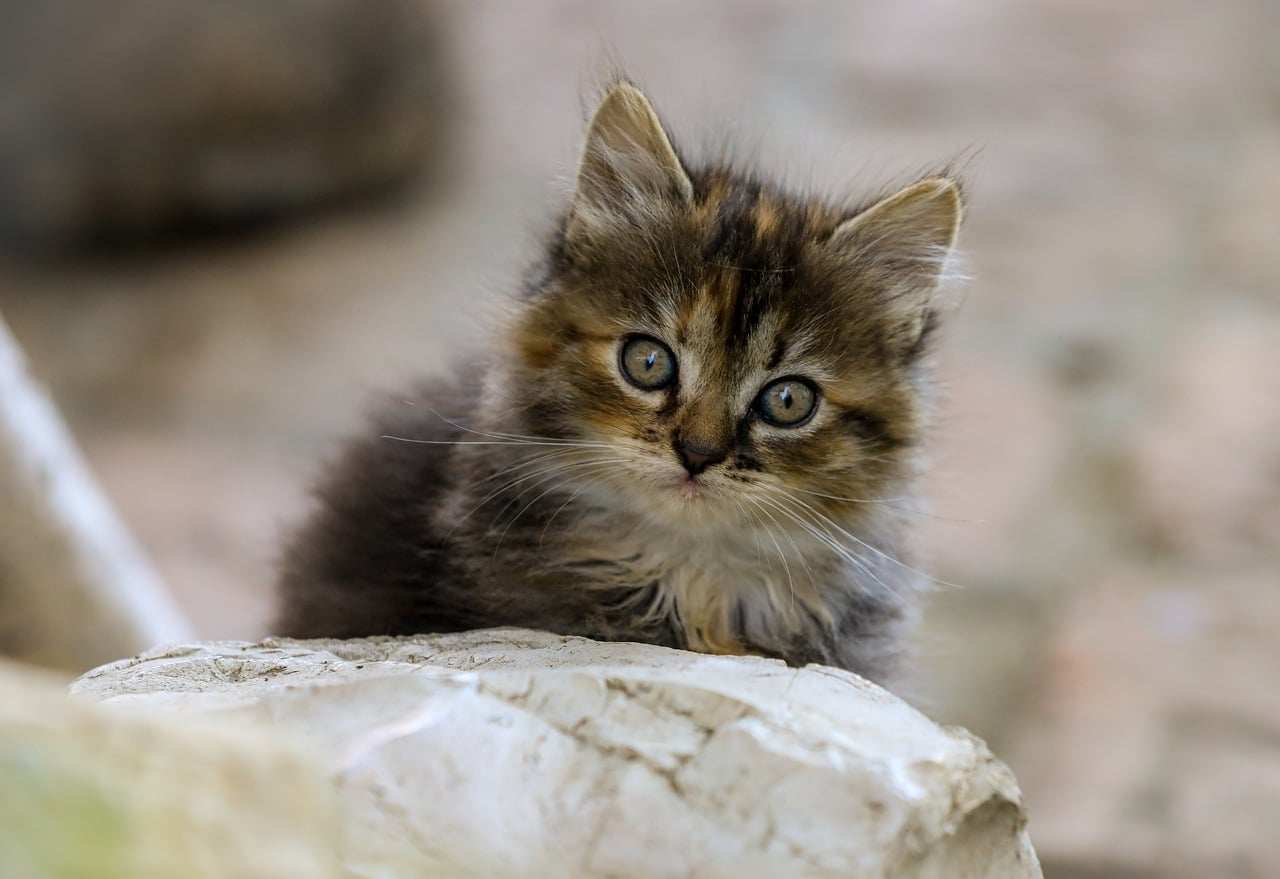
Kittens: Learning and Rapid Development
Kittens learn rapidly and develop social and cognitive skills at impressive speed, showing high curiosity, exploratory behaviour, and rapid skill acquisition as they discover their world and learn essential survival skills.
Adult Cats: Stable Learning and Memory Consolidation
Adult cats maintain stable learning ability and continue acquiring new skills throughout adulthood with long-term memory consolidating particularly for information with emotional or survival significance.
Senior Cats: Cognitive Changes and Support
Senior cats may experience gradual cognitive decline with age similar to other species. Some older cats develop feline cognitive dysfunction (FCD) analogous to dementia with signs including confusion or disorientation, increased night vocalisation and decreased daytime activity, house-soiling or inappropriate elimination, changes in interactions with people or other cats, and sleep disturbances. Continued mental enrichment, consistent routines, appropriate medical care, and cognitive support throughout life may help slow cognitive decline and maintain quality of life in senior cats.
Debunking Myths About Feline Intelligence

Myth 1: Cats are less intelligent than dogs. False. Cats and dogs are intelligent in different ways, shaped by different evolutionary histories. Dogs show greater responsiveness to human direction; cats show superior independent problem-solving and strategic thinking. Comparing intelligence using dog-centric measures unfairly penalises feline strengths.
Myth 2: Cats cannot be trained. False. Cats can be trained effectively using positive reinforcement and rewards appealing to feline motivation. The training process differs from dog training because cats have different motivational systems, but training is absolutely possible.
Myth 3: If a cat ignores a command, it means the cat does not understand it. False. A cat may fully understand the command but choose not to respond because the cat has calculated that responding does not serve their interests. Understanding and obedience are not synonymous. A cat ignoring you may be demonstrating intelligence rather than lack of intelligence.
Myth 4: Cats are not affectionate because they are not emotionally aware. False. Cats express affection differently from dogs, but this does not indicate lack of emotional awareness. Cats form genuine attachments, show preference for their owners, and respond to human emotional states. Different emotional expression does not mean less emotional intelligence.
Understanding the Uniqueness of Feline Intelligence

Cats are excellent problem solvers, skilled communicators, emotionally aware, highly adaptable, and capable of learning and growing throughout their lives. Their intelligence may be subtle and independent-focused rather than openly demonstrative and human-directed, but it is sophisticated and worthy of recognition. Rather than measuring feline intelligence by obedience or responsiveness to human direction, it is more appropriate to evaluate it through independence, environmental awareness, adaptive behaviour, problem-solving ability, memory, and emotional attunement. By these measures, cats are undeniably intelligent.
Your cat may not fetch a newspaper on command. But they may silently calculate the precise technique to open your cupboard, remember exactly where you keep their favourite treat from months ago, read your mood from subtle cues, and adjust their behaviour accordingly. And that is intelligence in its most sophisticated form.
Cats are highly intelligent animals with sophisticated cognitive abilities, though their intelligence appears different from dog or human intelligence due to evolutionary history as solitary hunters rather than cooperative pack animals. Cat brains contain approximately 250-300 million cortical neurons (fewer than dogs' 500+ million but more specialised for rapid visual processing and decision-making) with highly folded brain surfaces supporting complex cognition. Feline intelligence manifests through exceptional problem-solving (opening doors, accessing food containers, using objects as tools), strong memory (retaining information for years, particularly survival or emotionally significant information), social intelligence (recognising owner's voice, understanding human pointing, detecting mood changes), sophisticated communication adapted specifically for human interaction (varied meows, body language, slow blinking), and adaptability to new environments and circumstances. Research demonstrates cats understand their names, can follow human directions, and comprehend cause-and-effect relationships, though cats may choose not to respond if behaviour doesn't serve their interests. Some breeds (Siamese, Bengal, Abyssinian, Maine Coon) show greater tendencies toward high responsiveness and trainability, though individual personality matters more than breed. Cats successfully learn tricks, commands, and complex behaviours through positive reinforcement, though they respond poorly to punishment or coercion. Emotional intelligence in cats includes recognising human emotional tone, responding to household stress, seeking comfort when sensing human distress, and forming secure attachments. Intelligence can be assessed and strengthened through puzzle feeders, object permanence tests, training response, enrichment, interactive play, climbing structures, and food puzzles. Cognitive changes occur across lifespan with rapid learning in kittens, stable ability in adults, and potential cognitive decline in elderly cats. Common myths (cats less intelligent than dogs, cannot be trained, ignore commands from lack of understanding, lack emotional awareness) are false and reflect misunderstanding of feline cognition. Feline intelligence is sophisticated, independent-focused, and demonstrated through problem-solving, strategic thinking, memory, communication, and adaptive behaviour rather than obedience to human direction.
This guide is based on feline cognition research and behavioural science. Individual cats vary in intelligence, learning style, and motivation based on genetics, early socialisation, personality, and life experience. Intelligence assessment should consider the individual cat's unique cognitive profile rather than comparing to universal standards. For more comprehensive information on feline cognition and behaviour, consult scientific literature on animal behaviour and cognition or speak with qualified feline behaviour specialists.