Cats are notoriously independent drinkers, often seeming to prefer almost anything but plain water. However, when a cat appears to avoid water entirely or drinks noticeably less than before, this can quickly become a significant health concern. Proper hydration is absolutely essential for maintaining kidney function, supporting digestion, enabling temperature regulation, and sustaining overall health and wellbeing. Understanding why cats may not drink adequate water, recognising the warning signs of dehydration, and implementing effective strategies to encourage hydration are crucial responsibilities of responsible cat ownership.
This comprehensive guide explains why cats have naturally low thirst drives and may drink less water than required for optimal health, identifies common reasons cats refuse water, describes the serious health risks associated with chronic dehydration, and provides practical, evidence-based strategies for encouraging cats to drink adequate amounts. By understanding your cat's unique hydration needs and habits, you can protect your cat from the serious consequences of dehydration.
How Much Water Should a Cat Drink?

Understanding the baseline requirement for feline hydration helps you recognise whether your cat is drinking adequate amounts.
Minimum daily water requirements for cats: On average, cats need approximately 40 to 60 millilitres of water per kilogram of body weight per day. For a typical 4-kilogram cat, this translates to roughly 160 to 240 millilitres (approximately 6 to 8 fluid ounces) of water daily.
Important context: This water requirement includes water from multiple sources, not just what cats drink directly from bowls. The total hydration comes from:
- Direct drinking: Water consumed from bowls, fountains, or taps
- Wet food moisture: Water content in canned or raw food
- Prey moisture: In nature, cats obtain significant hydration from the moisture content of killed prey
Impact of diet on drinking: Cats eating primarily wet food may drink very little from bowls because they already receive substantial hydration (typically 75-80 percent water content) from their meals. Conversely, cats eating dry kibble (which contains only 5-10 percent water) must drink significantly more water to meet their hydration needs. This is one reason many veterinarians recommend wet food as superior for feline health and hydration.
Why Cats Often Drink Less Water Than They Need

The feline tendency to drink insufficient water is rooted in millions of years of evolutionary adaptation to arid environments. Understanding this evolutionary history helps explain why modern domestic cats often underestimate their water needs.
Evolutionary Background: Desert Dwellers
Cats descended from Felis silvestris lybica, a wildcat species native to arid regions of the Middle East and North Africa. These ancestor cats evolved in environments where water was scarce and drinking opportunities were limited. Over millions of years, cats adapted physiologically and behaviourally to thrive with minimal water intake.
How cats adapted to arid environments:
- Concentrated urine: Cats developed the ability to produce highly concentrated urine, conserving water by eliminating waste with minimal fluid loss
- Efficient kidneys: Feline kidneys are exceptionally efficient at reabsorbing water, reducing urine volume
- Low thirst drive: Cats evolved a naturally low thirst sensation, meaning they do not feel thirsty until they are already becoming mildly dehydrated
- Moisture from prey: In the wild, cats obtained most of their hydration from the moisture content of killed prey rather than from drinking water
This evolutionary adaptation worked perfectly for wild cats living in deserts hunting moisture-rich prey. However, it creates a serious problem for modern domestic cats whose environment and diet are fundamentally different from their ancestors' world.
The Modern Problem: Mismatch Between Evolution and Environment
The issue: Modern domestic cats retain these ancient evolutionary adaptations (low thirst drive, concentrated urine, moisture-seeking from food) even though their environment and diet no longer match the conditions for which these adaptations evolved. Many domestic cats eat dry kibble without the moisture content of wild prey, live in heated indoor environments that increase water loss through respiration, experience stressed lives that suppress thirst signals further, and have limited hunting opportunities that normally provide hydration.
The result is that cats often drink significantly less than the amount their modern lifestyle and diet actually require. A cat's internal signals tell them they have adequate water when they are actually becoming chronically dehydrated.
Common Reasons Cats Do Not Drink Enough Water

Preference for Moisture in Food
The most benign reason cats drink little is because they receive adequate hydration from wet food. Cats eating wet food diets may drink almost nothing from bowls because their moisture needs are already satisfied through meals.
Is this problematic? If a cat eating primarily wet food drinks minimal water, this is typically not a cause for concern provided the cat's overall hydration is adequate. However, consistency matters. If a cat previously drank regularly but suddenly stops, this change warrants investigation regardless of wet food consumption.
Dislike of Water Bowl Setup
Cats are surprisingly particular about the water they drink and where they drink it. Many cats actively refuse to drink if they dislike the water presentation.
Common water bowl complaints from cats:
- Bowl proximity to food: Cats prefer water sources separate from food. A water bowl placed next to food and litter creates an unappealing combination
- Plastic bowl contamination: Plastic bowls retain odours and can impart plastic taste to water, deterring fastidious cats
- Water staleness: Water that sits for hours accumulates bacteria and loses freshness. Cats detect and reject stale water
- Narrow bowl design: Bowls with narrow rims force cats' sensitive whiskers into contact with the rim, creating discomfort. Cats with whisker stress avoid drinking
- Bowl material: Some cats have strong preferences for ceramic, glass, or stainless steel bowls over plastic
- Water temperature: Some cats prefer cool water, whilst others prefer room temperature or slightly warm water
These preferences are not mere pickiness. They reflect cats' sensory sensitivity and natural aversion to contaminated or uncomfortable water sources. Respecting these preferences and optimising water presentation dramatically improves hydration in many cats.
Stress and Environmental Changes
Cats are highly stress-sensitive animals. Environmental changes suppress thirst and appetite as part of their stress response.
Stress triggers that reduce drinking:
- Moving to a new house or new room setup
- Introduction of new pets or people to the household
- Loud or chaotic environments
- Changes to routine or schedule
- Construction or renovation work
- Changes in family dynamics or absences
During stressful periods, cats often experience reduced appetite and reduced thirst simultaneously. This is a normal stress response, but it also increases dehydration risk during periods when hydration is most important. Providing extra water access and monitoring intake during stressful transitions is critical.
Dental or Mouth Pain
Pain in the mouth or teeth makes drinking uncomfortable, causing cats to reduce or avoid drinking despite needing fluids.
Painful conditions affecting drinking:
- Dental disease: Approximately 70 percent of cats by age three suffer from some degree of dental disease, from tartar accumulation to tooth decay or gum disease
- Mouth ulcers: Ulcers inside the mouth or on the tongue are extremely painful and deter drinking
- Gum inflammation: Inflamed, swollen gums cause pain when water contacts them
- Tooth extraction sites: Recently extracted teeth leave painful sockets that remain tender for weeks
- Stomatitis: Severe inflammation of the oral cavity causes extreme pain
If your cat suddenly reduces drinking, dental examination is essential. Pain-induced reduced drinking is a serious concern because the cat needs hydration but is avoiding it due to mouth pain.
Illness and Medical Conditions
Changes in drinking behaviour are often among the earliest indicators of underlying illness. Reduced water intake may indicate:
- Kidney disease: Contrary to expectations, some cats with kidney disease drink less (not more) as the disease progresses
- Urinary tract disease: Inflammation or infection causes discomfort with urination and affects thirst regulation
- Gastrointestinal illness: Nausea and digestive upset suppress appetite and thirst
- Fever or infection: Systemic infections increase fluid loss and affect thirst signals
- Diabetes: Despite increased thirst being a classic symptom, early or subtle diabetes may affect drinking
- Hyperthyroidism: This common condition in senior cats affects appetite and drinking
Critical point: Cats are masters at hiding illness. Subtle changes in drinking behaviour may be the first sign of serious disease. Any change in drinking patterns warrants veterinary investigation rather than assumption that the cat is simply being picky.
Signs of Dehydration in Cats

Recognising dehydration early is critical because progressive dehydration causes serious health consequences. Learning to identify dehydration signs allows you to intervene before damage occurs.
Early signs of dehydration:
- Dry or sticky gums: Gently lift your cat's lip and feel the gums. In a well-hydrated cat, gums are moist. Dry or sticky gums indicate dehydration
- Lethargy and reduced activity: Dehydrated cats often become unusually quiet and withdrawn
- Reduced appetite: Dehydration causes decreased interest in food
- Sunken eyes: Eyes that appear to recede slightly into the sockets indicate moderate dehydration
Advanced signs of dehydration:
- Poor skin elasticity: Gently pinch the skin at the scruff and release it. In a well-hydrated cat, skin snaps immediately back. Dehydrated skin returns to normal slowly
- Constipation: Lack of fluids causes dry, hard stools
- Rapid heart rate: The heart works harder to pump thickened blood in dehydrated animals
- Weak or rapid pulse: Indicates significant dehydration
Severe dehydration is a medical emergency requiring immediate veterinary care. Signs of severe dehydration include collapse, loss of consciousness, extreme lethargy, or complete inability to move. Do not delay seeking emergency care if your cat shows these signs.
Health Risks of Insufficient Water Intake
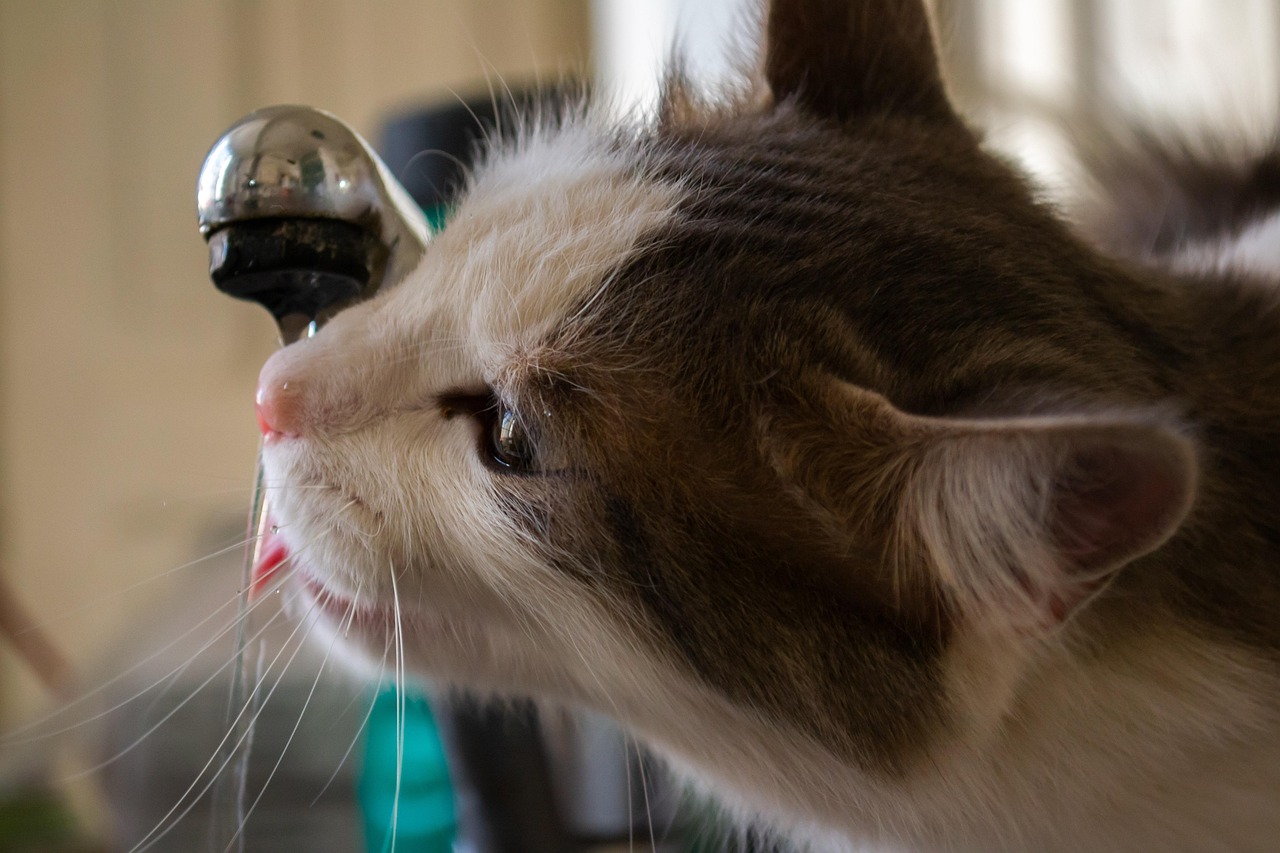
Chronic insufficient water intake creates a cascade of health problems, particularly affecting the urinary and renal systems.
Urinary Tract Disease
Chronic dehydration significantly increases the risk of feline lower urinary tract disease (FLUTD), a painful and potentially life-threatening condition.
How dehydration contributes to urinary disease: Concentrated urine from dehydration irritates bladder lining, creates an environment where bacteria and minerals more easily form crystals, and increases risk of blockage. Cats with inadequate water intake develop more concentrated urine, which makes urinary disease more likely.
Symptoms of urinary tract disease: Straining to urinate, painful urination, inappropriate elimination outside the litter tray, blood in urine, and frequent urination attempts. Male cats are particularly vulnerable to complete urinary blockage, which is a life-threatening emergency.
Bladder Stones and Crystals
Concentrated urine creates the perfect environment for formation of bladder stones and urinary crystals. These mineral accumulations cause painful inflammation, blockage, and infection.
Risk factors: Male cats are at higher risk than females, particularly for blockage. Some cats are genetically predisposed to stone formation. Dehydration dramatically increases risk regardless of genetics.
Kidney Disease
Chronic dehydration contributes to kidney disease and worsens existing kidney problems. Kidneys require adequate fluid to function properly. Chronically dehydrated cats experience gradual kidney damage that may not become obvious until the disease is advanced.
Why this is concerning: Chronic kidney disease is one of the most common health problems in senior cats. Adequate hydration throughout a cat's life helps prevent or slow progression of kidney disease.
Constipation
Insufficient water intake leads to constipation as the digestive system lacks moisture. Constipation causes discomfort and can become severe enough to require medical intervention.
Heat-Related Illness
Dehydrated cats are more vulnerable to heat-related illness in warm environments. The body relies on adequate hydration to regulate temperature through panting and sweating. Dehydrated cats cannot cool efficiently during hot weather.
How to Encourage Your Cat to Drink More Water

Fortunately, several evidence-based strategies effectively encourage cats to drink more water. Because cats are individuals, trying multiple approaches often reveals what works best for your specific cat.
Improve Water Bowl Placement
Strategic placement matters: Place water bowls in locations away from both food and litter trays. Cats naturally prefer to drink far from where they eat and eliminate. If possible, provide water in multiple locations throughout your home, giving your cat easy access from wherever they are.
Multi-bowl advantage: Providing 3 to 5 water bowls in different locations increases the likelihood your cat will drink opportunistically whenever they pass a bowl.
Choose the Right Bowl Material
Avoid plastic: Plastic bowls retain odours and can impart plastic taste to water. Replace plastic with:
- Ceramic bowls: Non-porous, neutral taste, easy to clean
- Glass bowls: Non-reactive, transparent so cats can see water level
- Stainless steel bowls: Durable, easy to sanitise, neutral taste
Bowl design matters: Use wide, shallow bowls that allow cats to drink without their sensitive whiskers touching the rim. Whisker stress is a genuine concern for cats and affects drinking behaviour.
Offer Fresh Water Daily
Change water frequency: Water should be changed at least once daily. In warm weather or households with multiple cats, change water more frequently. Stale, sitting water develops bacteria and loses freshness.
Clean bowls regularly: Biofilm (a thin layer of bacteria and minerals) accumulates on bowl surfaces and can impart unpleasant taste or odour. Wash bowls daily with hot water. Weekly deep cleaning removes stubborn biofilm.
Try a Cat Water Fountain
Many cats show marked preference for running water over still water. Cat water fountains provide several advantages:
- Moving water appears fresher: Flowing water looks and smells fresher than still water, appealing more to cats
- Natural curiosity: The movement and sound of water triggers cats' natural curiosity and hunting instincts
- Improved drinking frequency: Cats near fountains often drink more frequently than cats using traditional bowls
- Oxygenation: Moving water becomes oxygenated, which many cats find more palatable
Important fountain maintenance: Fountains require regular cleaning and filter changes to prevent bacterial growth and mineral accumulation. A well-maintained fountain provides significant hydration benefits; a neglected fountain becomes unsanitary.
Increase Moisture in Food
Feed primarily wet food: Switching to wet food as the main diet dramatically increases overall moisture intake. Wet food contains 75-80 percent water, providing substantial hydration with every meal.
Add water to food: Add a small amount of warm water or low-sodium broth to wet food, creating a soupy consistency that increases moisture intake.
Offer bone broth: Plain, unsalted bone broth (vet-approved and with no toxic ingredients like garlic or onion) is appealing to many cats and provides hydration plus beneficial nutrients.
Avoid milk and sugary additions: Never flavour water with milk or sugary liquids. These can cause digestive upset and do not provide appropriate hydration. Cats are lactose intolerant, and sugar is inappropriate for feline diets.
Experiment With Water Temperature
Individual cats have temperature preferences. Some cats prefer cool water, whilst others prefer room temperature or slightly warm water (especially in cooler months). Observe your cat's drinking behaviour at different temperatures to identify preferences.
Safe temperature experimentation: Never offer hot water. Lukewarm water (around body temperature) is the warmest safe option. Cool water from a fountain or fresh from the tap is appropriate.
What NOT to Do

Do not force a cat to drink: Forcibly making a cat drink creates stress and can damage your relationship. Forcing water into the mouth can also cause aspiration if water enters the lungs. Let cats drink voluntarily.
Do not add inappropriate flavourings: Milk causes digestive upset in lactose-intolerant cats. Sugary liquids are inappropriate and potentially harmful. Stick to plain water, appropriate broths, or the strategies listed above.
Do not ignore sudden changes: If your cat suddenly starts drinking much less (or conversely, drinking excessively), this warrants veterinary investigation. Sudden changes in drinking are not normal and often indicate underlying illness.
Do not assume low drinking is benign: Just because a cat is eating well and acting normally does not mean inadequate drinking is acceptable. Many serious diseases develop silently without obvious behavioural changes until they are advanced.
When to See a Veterinarian

Contact your veterinarian promptly if you notice any of these concerning drinking-related changes:
- Complete cessation of drinking: If your cat stops drinking entirely, this is a medical emergency
- Signs of dehydration: Dry gums, lethargy, sunken eyes, poor skin elasticity, or constipation warrant immediate evaluation
- Sudden change in drinking habits: If your cat previously drank regularly but suddenly reduces intake significantly, investigate the cause
- Excessive thirst paired with other symptoms: Drinking excessively combined with increased urination, weight loss, or lethargy suggests diabetes or kidney disease
- Urinary symptoms: Straining to urinate, painful urination, blood in urine, or inappropriate elimination paired with drinking changes indicates urinary disease
- Multiple symptoms: If reduced drinking accompanies appetite loss, lethargy, vomiting, or other illness signs, veterinary evaluation is essential
Prompt care matters: Early intervention for dehydration-related problems (urinary disease, kidney disease, constipation) allows treatment before serious complications develop. By the time severe symptoms appear, significant damage may already have occurred.
Special Considerations for Senior Cats

Senior cats (typically considered 10+ years old) face special hydration challenges requiring extra vigilance.
Age-related hydration issues in senior cats:
- Chronic kidney disease prevalence: Senior cats frequently develop kidney disease, which affects thirst regulation and fluid balance
- Reduced thirst response: The ageing brain becomes less responsive to dehydration signals, meaning senior cats may not feel thirsty even when dehydrated
- Dental disease: Painful teeth make drinking uncomfortable, leading to reduced intake
- Mobility challenges: Senior cats with arthritis may struggle to reach water bowls, particularly if bowls are in inconvenient locations
- Multiple conditions: Senior cats often have multiple concurrent health issues that increase dehydration risk
Senior cat hydration strategies:
- Place water bowls in multiple locations including near favourite resting spots
- Use elevated bowls to reduce strain on arthritic joints
- Feed wet food as primary diet to increase moisture intake
- Monitor drinking and urination patterns closely
- Schedule veterinary checks twice yearly rather than annually
- Ensure dental health to prevent pain-related reduced drinking
Senior cats require extra attention to hydration because they are most vulnerable to dehydration-related complications and often have reduced ability to cope with fluid deficits.
Understanding Your Cat's Hydration Needs

Cats evolved in arid environments where water was scarce, but modern domestic cats live in very different conditions where adequate hydration is necessary for health. Your cat's natural low thirst drive does not match modern life requirements. By understanding why cats drink less than they need, recognising health risks of dehydration, and implementing hydration-encouraging strategies, you actively protect one of your cat's most critical health needs.
Rather than viewing low water intake as a cat's personality quirk to be tolerated, recognise it as a health management challenge requiring your active intervention. Proper hydration supports kidney function, prevents urinary disease, maintains digestive health, and contributes to overall longevity. The effort invested in encouraging adequate drinking pays dividends in your cat's health and wellbeing.
Cats naturally drink less water than they require because they evolved from desert-dwelling ancestors with low thirst drives, historically obtaining most hydration from moisture in prey rather than from drinking. This evolutionary adaptation creates a mismatch between cats' natural thirst signals and their actual hydration needs in modern environments, particularly when eating dry food. Normal water requirements are approximately 40-60 millilitres per kilogram of body weight daily, with actual intake including water from drinking, wet food, and moisture sources. Common reasons cats do not drink adequate water include preference for wet food moisture, dislike of water bowl setup (proximity to food or litter, plastic bowls, narrow rims causing whisker stress, stale water), stress or environmental changes, dental or mouth pain, and underlying medical conditions that suppress thirst. Cats are masters at hiding illness, making subtle drinking changes potentially significant warning signs of serious disease. Dehydration signs include dry or sticky gums, lethargy, reduced appetite, sunken eyes, poor skin elasticity, and constipation, with severe dehydration being a medical emergency. Chronic inadequate water intake significantly increases risk of urinary tract disease, bladder stones and crystals, kidney disease, constipation, and heat-related illness, with male cats particularly vulnerable to life-threatening urinary blockages. Effective strategies to encourage drinking include strategic water bowl placement away from food and litter, choosing non-plastic bowls in wide shallow designs to prevent whisker stress, changing water daily and cleaning bowls regularly, providing cat water fountains that appeal to many cats' preference for moving water, feeding primarily wet food for substantial hydration, and experimenting with water temperature to match individual preferences. Senior cats require special attention to hydration due to increased prevalence of kidney disease, reduced thirst response, dental disease, and mobility challenges. Sudden changes in drinking behaviour warrant prompt veterinary investigation rather than dismissal as pickiness, as they often indicate underlying medical problems. By implementing hydration-encouraging strategies and monitoring drinking patterns, you actively protect your cat's kidney function, urinary health, and overall wellbeing throughout their life.
This guide is based on feline hydration requirements and veterinary health standards. Individual cats may have varying hydration needs based on age, health status, activity level, diet, and environmental factors. Sudden or significant changes in drinking behaviour should always be evaluated by a veterinarian to rule out underlying medical conditions. Some health conditions require modified hydration strategies that should be discussed with your veterinary team.